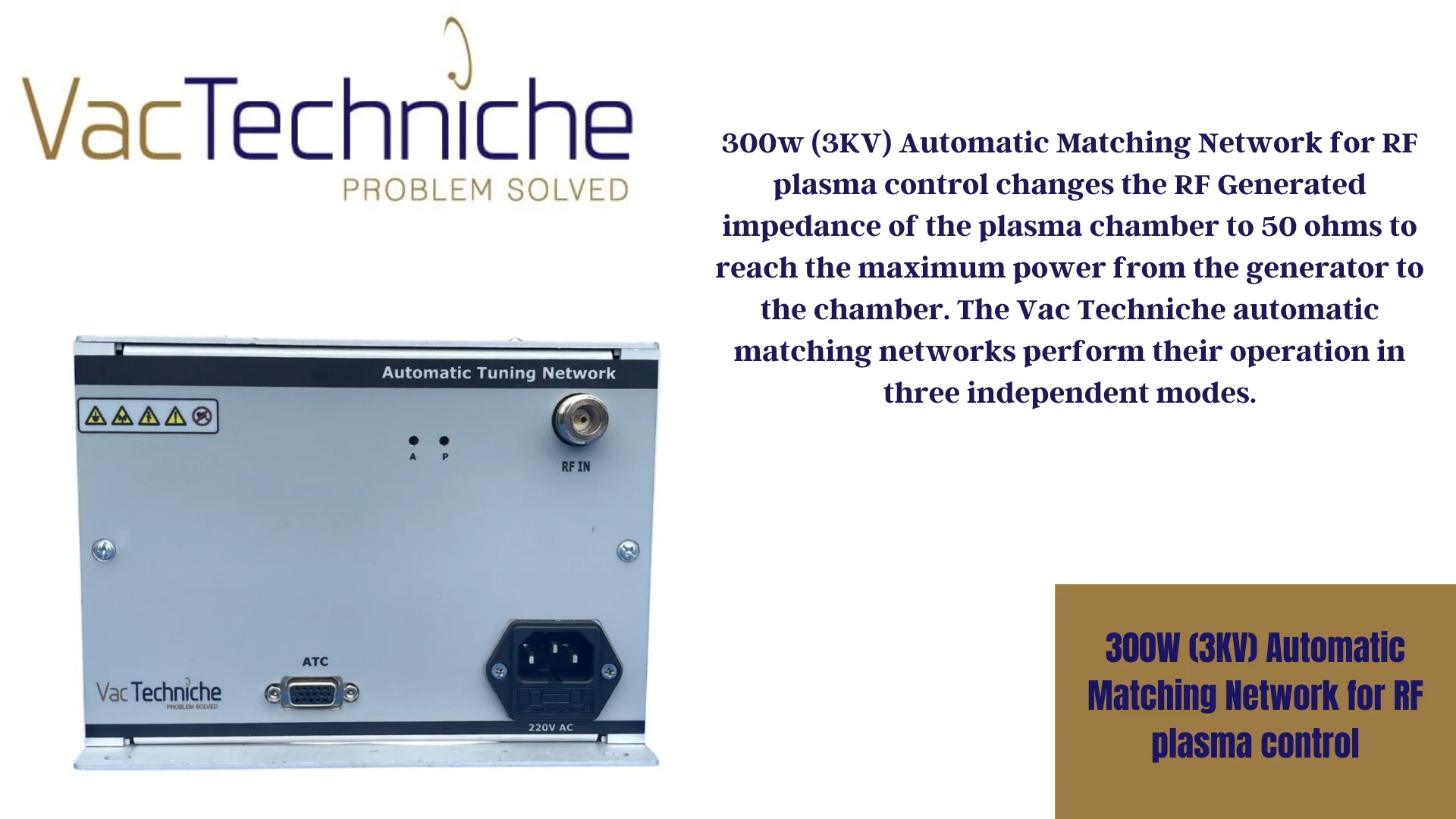

RF Matching Network for Sputtering and Plasma Systems
An RF matching network is the component that helps transfer power efficiently from the RF generator to the plasma load. Because plasma impedance changes during ignition and operation, the matching network continuously adjusts the electrical relationship between the generator and the chamber. As a result, it reduces reflected power, improves plasma stability, and protects the generator.
In sputtering, plasma cleaning, etching, and thin-film deposition systems, the matching network is not optional. It is a critical part of the RF power chain, especially at 13.56 MHz and other common plasma frequencies. Without proper matching, the generator cannot deliver power efficiently, and the process becomes less stable and less repeatable.
Need the Right Matching Network for Your RF System?
Tell us your generator power, operating frequency, and application. VacTechniche can recommend the right RF matching network for sputtering, plasma generation, and semiconductor systems.
What an RF Matching Network Does
An RF matching network transforms the changing impedance of the plasma chamber into a load that the generator can drive more efficiently. In many RF sputtering systems, the target is to match the chamber to a 50-ohm resistive condition so the generator can deliver power with minimal reflection. This improves energy transfer and helps maintain stable plasma conditions during the process.
Because the plasma load is dynamic, the matching network must respond to those changes quickly and accurately. If it does not, reflected power rises, ignition becomes harder, and the generator may reduce output or trigger protection limits.
Why Matching Matters in Sputtering
In sputtering and plasma systems, the electrical conditions inside the chamber do not stay constant. Gas pressure, target material, chamber geometry, and plasma state can all affect impedance. Therefore, the matching network helps keep power delivery stable even as the process changes.
This is especially important in RF sputtering of insulating materials, where process stability directly affects coating quality and repeatability. A well-matched system improves deposition consistency, reduces wasted power, and helps protect the RF generator from excessive reflected energy.
Automatic vs Manual Matching
RF matching networks are available in both automatic and manual configurations. The right choice depends on your process stability, operator preference, and system complexity.
- Automatic matching: Adjusts tuning elements in real time as plasma conditions change. This is ideal for dynamic processes, easier operation, and improved repeatability.
- Manual matching: Requires the operator to tune the network directly. This can work well in stable and repeatable laboratory systems where process conditions do not change often.
- Auto matching advantage: Faster tuning, lower reflected power during process drift, and reduced operator intervention.
- Manual matching advantage: Simpler hardware, lower cost in some setups, and greater hands-on control for experienced users.
Common Applications
RF matching networks are used across a wide range of plasma-based systems. Their role is essential wherever RF power must be delivered into a changing load.
- Magnetron sputtering: Improves power delivery to the target and supports stable coating conditions.
- Plasma cleaning: Helps maintain consistent plasma ignition and chamber performance.
- Etching systems: Supports stable plasma density and repeatable process control.
- Semiconductor manufacturing: Reduces reflected power and improves RF power transfer in demanding process environments.
- Thin-film deposition: Contributes to coating quality by keeping plasma behavior more stable.
Featured Product Links
This page should work closely with your RF generator product pages. The two strongest supporting links are your RF generator and RF plasma generator pages, because these products are directly connected to matching-network performance.
300W RF generator and RF plasma generator are the most relevant pages to highlight here.
Choosing the Right Matching Network
When selecting an RF matching network, focus on operating frequency, generator power, chamber type, and whether your process is stable or highly dynamic. A 13.56 MHz sputtering system may need a different tuning approach than a lower-frequency or higher-power industrial plasma setup.
You should also consider whether automatic tuning is necessary. In many modern systems, automatic matching improves ease of use and process stability. However, manual tuning may still be suitable for controlled laboratory applications with consistent conditions.
Request a Quote
Need a matching network for your sputtering or plasma system? Contact VacTechniche for a tailored recommendation based on your generator, chamber, and process requirements.
Conclusion
An RF matching network is essential for efficient power transfer in sputtering and plasma systems. By reducing reflected power and adapting to changing plasma impedance, it helps improve process stability, generator protection, and overall performance.
For VacTechniche systems, the matching network should be considered together with the 300W RF generator or the RF plasma generator so the full RF power chain works as one optimized system.
Frequently Asked Questions
What does an RF matching network do?
An RF matching network helps transfer power efficiently from the RF generator to the plasma load by reducing reflected power and adjusting for changing impedance.
Why is a matching network needed in RF sputtering?
RF sputtering systems have changing plasma conditions, so the matching network helps maintain stable power delivery and protects the generator from excessive reflected energy.
What is the difference between automatic and manual matching?
Automatic matching adjusts in real time as the process changes, while manual matching requires operator tuning and is more suitable for stable conditions.
Does every RF plasma system need a matching network?
In most practical RF plasma and sputtering systems, yes. The matching network is required for efficient power transfer and stable operation.


