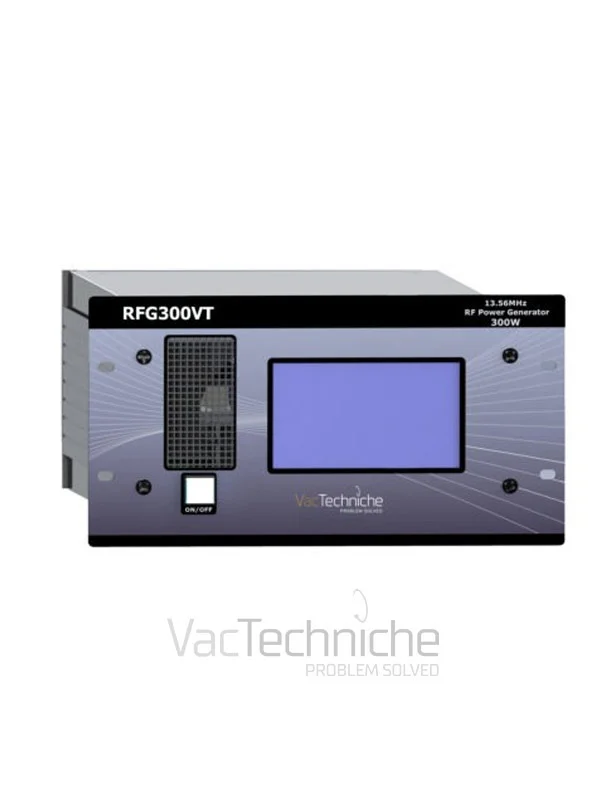

RF Generators for Semiconductor and Thin-Film Coating
RF generators are widely used in semiconductor manufacturing and thin-film coating because they deliver the controlled power needed to create and sustain plasma. In these processes, the generator supports etching, deposition, surface activation, and coating quality, so stable RF output directly affects repeatability and yield.
Most systems in this category use 13.56 MHz or another industrial RF frequency, depending on chamber design and process requirements. Because semiconductor and coating tools often run dynamic plasma loads, the generator must work with a matching network to keep power transfer efficient and reflected power low.
Many plasma systems rely on standard industrial RF frequencies such as 13.56 MHz. For background on regulated ISM bands, see the FCC overview of ISM frequency allocations.
Need Help Choosing an RF Generator for Semiconductor or Coating?
Tell us your process, chamber size, power target, and operating frequency. VacTechniche can recommend the right RF generator and matching network for your application.
RF Generator Semiconductor Applications
RF power is central to semiconductor processing because it gives engineers precise control over plasma conditions. That control matters in etching, PECVD, PVD, and other deposition steps where even small changes can affect device performance. In addition, RF power helps maintain stable plasma on a wide range of target materials and chamber configurations.
Unlike simple DC power, RF generators can handle the dynamic electrical behavior found in plasma-based semiconductor tools. As a result, they support more consistent process control and better integration into modern production systems.
RF Generator Semiconductor Benefits for Thin-Film Coating
Thin-film coating systems also rely on RF power to support plasma-assisted deposition and surface modification. Whether the goal is adhesion improvement, material layer formation, or coating uniformity, the RF generator must respond quickly to process changes and help keep plasma conditions stable throughout the cycle.
This is especially important in high-throughput production environments where repeatability and uptime matter. A stable RF source helps reduce variability and supports better coating results across different substrate types and process conditions.
Choosing an RF Generator Semiconductor System
A matching network is often used with the RF generator to optimize the impedance between the power source and the plasma load. Since plasma is not a fixed electrical load, conditions can shift during processing, which can increase reflected power and reduce efficiency.
A well-matched system improves power transfer, protects the generator, and supports more stable operation. This is a key reason RF systems are commonly designed as part of a complete power-and-match solution rather than as standalone units.
RF generator semiconductor matching networks
When selecting an RF generator for semiconductor or thin-film coating use, important factors include output power, operating frequency, load tolerance, response speed, and compatibility with the process chamber. Many applications use 13.56 MHz, but the correct frequency depends on the specific tool and process requirements.
The best choice is usually the one that provides stable power, strong process control, and easy integration into the full plasma system. For production applications, reliability and repeatability are just as important as raw output capability.
Applications and Benefits
RF generators for these applications help support etching, sputtering, PECVD, PVD, and other vacuum-based plasma processes. They can improve process repeatability, support coating consistency, and reduce downtime caused by unstable plasma conditions.
In production settings, that combination of control and reliability can make a measurable difference in yield and throughput. For that reason, RF generators remain a core technology in both semiconductor manufacturing and thin-film coating.
Request a Quote
If you need an RF generator for semiconductor or thin-film coating applications, our team can help you identify the right solution for your process requirements. Share your target power, frequency, chamber type, and application, and we can recommend a suitable setup.


