
What Is an RF Generator?
An RF generator converts electrical power into radio-frequency energy – typically at 13.56 MHz – to create and sustain plasma, drive sputtering systems, and support thin-film deposition processes. Because it provides the core power in any plasma-based system, it is one of the most important components in both industrial and research environments.
RF generators serve a wide range of industries. In semiconductor fabrication, they support etching and deposition. In surface treatment, they drive plasma cleaning and activation. Furthermore, in laboratory coating systems, they power desktop sputtering and vacuum technology applications.
Need an RF Generator for Your System?
Tell us your application, power level, and frequency requirements. VacTechniche will recommend the right RF generator and matching network for your setup.
What Does an RF Generator Do?
An RF generator produces a stable, high-frequency alternating signal and delivers it to a plasma chamber or sputtering target through a matching network. As a result, the energy ionizes the process gas inside the chamber, creating plasma that engineers use for cleaning, etching, coating, or deposition.
Without the RF generator, the system cannot create or sustain plasma. That is why engineers treat it as the core power source in RF-driven plasma systems rather than a supporting component. In other words, the entire process depends on the quality and stability of its output.
How an RF Generator Works
First, the generator converts mains power into a stable DC supply. Next, an oscillator creates the RF signal at the target frequency, and an amplifier boosts it to the required power level. The signal then passes through a filter stage before the output delivers it to the load. Finally, a matching network between the generator and the chamber ensures efficient power transfer and keeps reflected power to a minimum.
Because the plasma load changes constantly during operation, the matching network plays a critical role in maintaining performance. Without proper matching, the generator triggers its protection circuit and reduces or shuts off its output. For a more detailed explanation, see our guide on how RF generators work.
Why 13.56 MHz Is the Standard
Most industrial RF generators for plasma and sputtering operate at 13.56 MHz. This frequency belongs to the ISM band – Industrial, Scientific, and Medical – which is globally license-free and well-suited for capacitive plasma generation. Furthermore, it provides a good balance between plasma control, power efficiency, and equipment compatibility, which is why the industry has adopted it as the accepted standard.
Although other frequencies exist, most manufacturers design their plasma chambers and matching networks around 13.56 MHz. Therefore, choosing a generator at this frequency gives you the widest range of compatible equipment and the most straightforward path to a reliable system.
Types of RF Generator
RF generators come in a range of power levels and configurations. Because every application has different requirements, choosing the right power level is as important as choosing the right frequency:
- Laboratory units (300W–600W): Compact systems for desktop sputtering, plasma cleaning, and research applications. These are ideal for low-volume or exploratory work.
- Mid-range systems (600W–1200W): Suited to more demanding sputtering and plasma processing environments where higher power and stability are needed.
- Industrial units (3000W–5000W+): Designed for large vacuum chambers, multi-target systems, and production coating lines that run continuously.
- Dual frequency systems: Deliver two frequencies simultaneously, giving engineers independent control over plasma density and ion energy for advanced etching and PECVD processes.
RF Generator vs DC Power Supply
RF generators and DC power supplies both appear in sputtering and plasma systems, however they serve different purposes. DC power supplies work well for conductive targets and simpler plasma conditions because they deliver a steady, predictable current. RF generators, on the other hand, handle insulating targets and dynamic plasma loads more effectively since they alternate at high frequency and avoid charge buildup on non-conductive surfaces.
In many systems, engineers use both together depending on the material and process stage. Therefore, understanding the difference helps you specify the right power source for each part of your system rather than defaulting to one option for everything.
Featured Products
300W RF Generator for Magnetron Sputtering and Plasma Generation
This compact 300W unit operates at 13.56 MHz and suits dual magnetron sputtering and plasma generation in laboratory and light industrial environments. In addition to front-panel control, it includes reflected power protection and works best when paired with an automatic RF matching network for optimum performance.
RF Matching Network for Sputter Systems
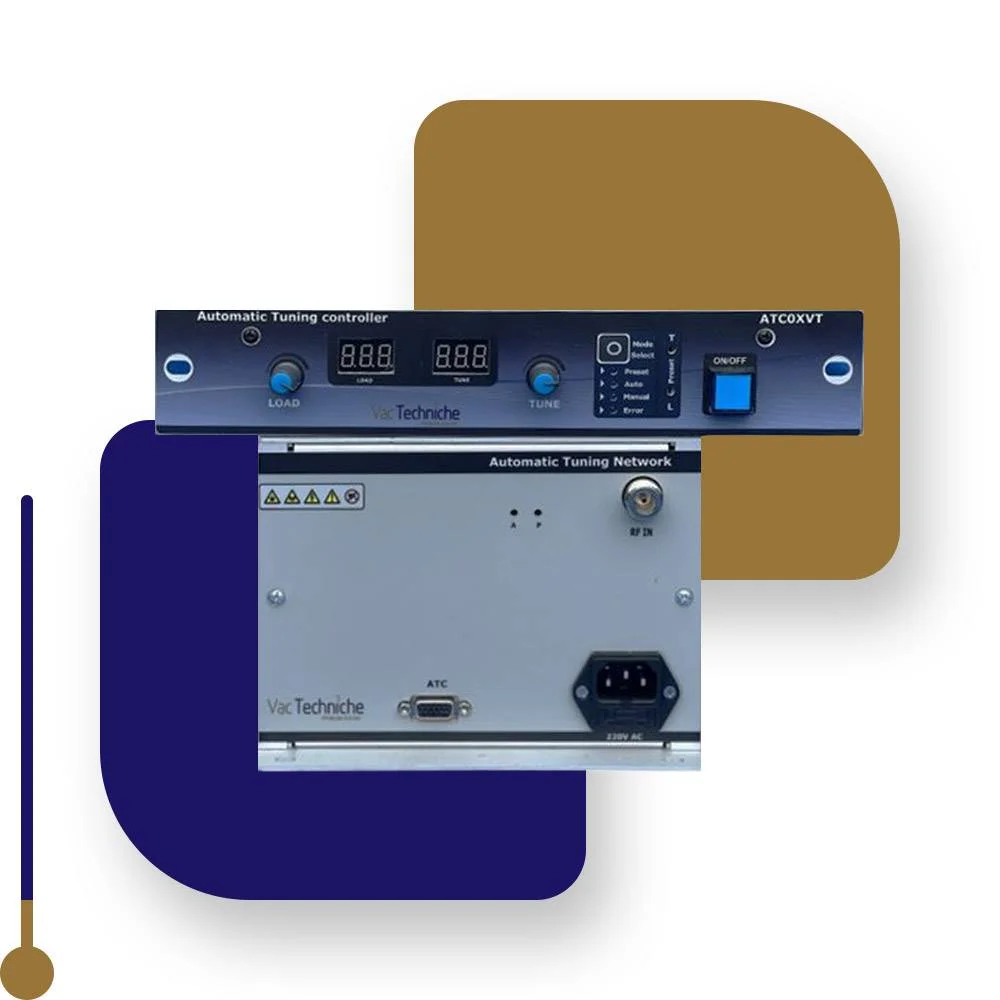
These auto and manual tune matching networks work with a wide range of RF generator configurations. Because they dynamically adapt to the plasma load, they protect the generator and maintain efficient power delivery throughout the process.
Request a Quote
Looking for a complete RF generator and matching network solution? Contact VacTechniche for a tailored recommendation.
Conclusion
An RF generator is the core power source in any RF-driven plasma or sputtering system. Because it directly affects plasma stability, process repeatability, and equipment reliability, choosing the right generator and pairing it with the correct RF matching network is the most important decision in system design.
Overall, the combination of the right power level, 13.56 MHz operation, and a well-matched network gives you the foundation for a consistent and reliable process. Explore the 300W RF generator, review the RF matching network range, or request a quote to discuss your requirements.
Frequently Asked Questions
What is an RF generator?
An RF generator produces high-frequency alternating power, typically at 13.56 MHz, to create plasma in sputtering, etching, cleaning, and thin-film deposition systems.
What is an RF generator used for?
RF generators power plasma generation, magnetron sputtering, surface treatment, plasma cleaning, reactive ion etching, and semiconductor fabrication processes.
What does RF stand for in RF generator?
RF stands for radio frequency. In plasma and sputtering systems, it refers to the high-frequency alternating signal the generator produces, most commonly at 13.56 MHz.
Do RF generators need a matching network?
Yes. Because the plasma load changes during operation, the system needs a matching network to transfer power efficiently and reduce reflected power. Without it, the generator triggers its protection circuit and cannot operate properly.
What is the difference between an RF generator and a radio frequency generator?
There is no difference. RF generator and radio frequency generator are two names for the same class of equipment.


